Back
The Cogent Outage That Touched 19 Countries and Kept Coming Back
On September 2, a Cogent Communications outage rippled across 19 countries over three hours, clearing twice and returning twice. Here's what a transit provider outage actually looks like from the inside, and why it matters even if you've never heard of Cogent.

Jagdish Patil
•
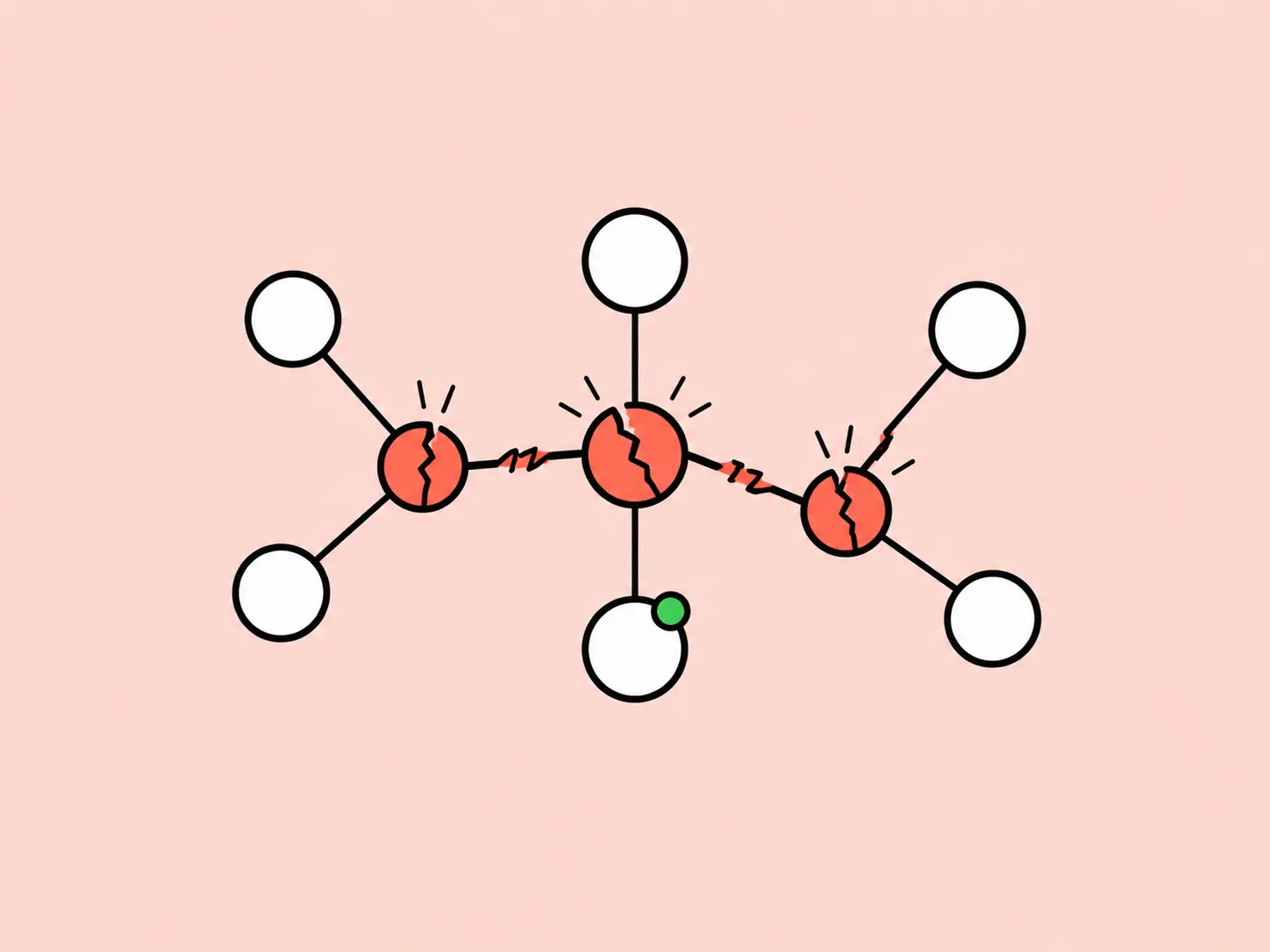
An Outage That Kept Coming Back
This wasn't one clean failure and one clean recovery. ThousandEyes' timeline shows the outage appearing to clear, then returning, twice. About five minutes after the initial batch of nodes appeared to recover, Los Angeles, Atlanta, and Phoenix started exhibiting outage conditions again. Roughly two hours and ten minutes into the incident, Los Angeles flared up a third time, this time joined by Dallas, Atlanta, and Phoenix. The outage was finally cleared around 12:45 PM EDT, three hours and five minutes after it started, with the actual cumulative outage time totaling two hours and 41 minutes across that window.
That pattern, clear, relapse, clear, relapse again, is a specific kind of hard to diagnose. A single clean failure with a single clean recovery tells you something broke and something got fixed. A failure that clears and comes back multiple times, moving between different cities each time, suggests the underlying issue wasn't fully resolved on the first attempt, or that fixing it in one location shifted load or routing pressure onto another.
Why a Transit Provider Outage Is Different From a CDN Outage
The Cloudflare and Zayo incidents we've covered before happened at the edge, the layer closest to end users, where a website's traffic terminates. Cogent operates one layer deeper, in the backbone that carries traffic between networks before it ever reaches an edge provider. When a transit provider has a bad morning, the sites that go down aren't necessarily using Cogent directly. They're using a hosting provider, a CDN, or an ISP that happens to route through Cogent for part of its path.
This is why the same week's report also noted an AT&T outage on September 6, centered on nodes in Ashburn, Virginia, lasting 57 minutes with a brief relapse of its own. Different company, different layer, same shape: a regional node cluster degrades, some traffic reroutes successfully, some doesn't, and the businesses actually affected have no direct relationship with the company whose network broke.
The Number That Should Give You Pause
Nineteen countries. Not because Cogent has that many direct customers experiencing simultaneous outages in the same way, but because transit failures cascade through downstream partners who each serve their own customers in their own regions. A three hour incident centered on a handful of US cities turned into a global event because the internet's backbone doesn't respect the difference between "your problem" and "someone six networks away's problem."
For context on how common this actually is, ThousandEyes logged 687 global network outage events during that same week, a 6% increase from the week before. In the US specifically, there were 537, up 15%. This wasn't an exceptional week. It was a fairly typical one by 2026's standards, which is itself the more unsettling fact.
What This Actually Means If You're Not Cogent's Customer
You almost certainly aren't. Most freelancers and small agencies have never heard of Cogent, GTT, Zayo, Arelion, or any of the dozen or so Tier 1 transit providers whose outages show up in these weekly reports. That's exactly the point. You don't get to choose which invisible layer of infrastructure has a bad morning, and you don't get a warning before it happens three networks upstream of your client's hosting provider.
What you can control is how fast you find out that something you're responsible for stopped responding, regardless of whether the root cause turns out to be your server, your host's data center, or a Cogent node in Los Angeles that decided to relapse for the third time in two hours. A monitoring check that fires within a minute doesn't care which layer broke. It just tells you the thing you're watching isn't answering anymore, and that's the only information you actually need in the moment.
Nobody can predict which Tier 1 provider has a bad morning next. You can control how fast you find out it happened to you. SIOPS checks in under 60 seconds and sounds a Critical Device Alarm that gets through Do Not Disturb. Get it at siops.app.
Canonical's Websites Went Dark for Four Hours While Ubuntu's Repos Stayed Up. So Was Ubuntu Down?
Outage Breakdown

ChatGPT Spent October 5 'Degraded,' Not Down. That's the Outage Your Monitoring Misses.
Outage Breakdown

Spotify Went Down for 173 Countries, and Its Only Status Page Was a Tweet
Outage Breakdown