Back
7 Best Better Stack Alternatives in 2026 (Free and Paid)
Better Stack is a genuinely good platform, but it has grown into a full observability suite priced and built for teams. If you are a freelancer or small agency who just needs to know when a client site goes down, here are seven alternatives worth comparing, ranked for different needs.

Jagdish Patil
•
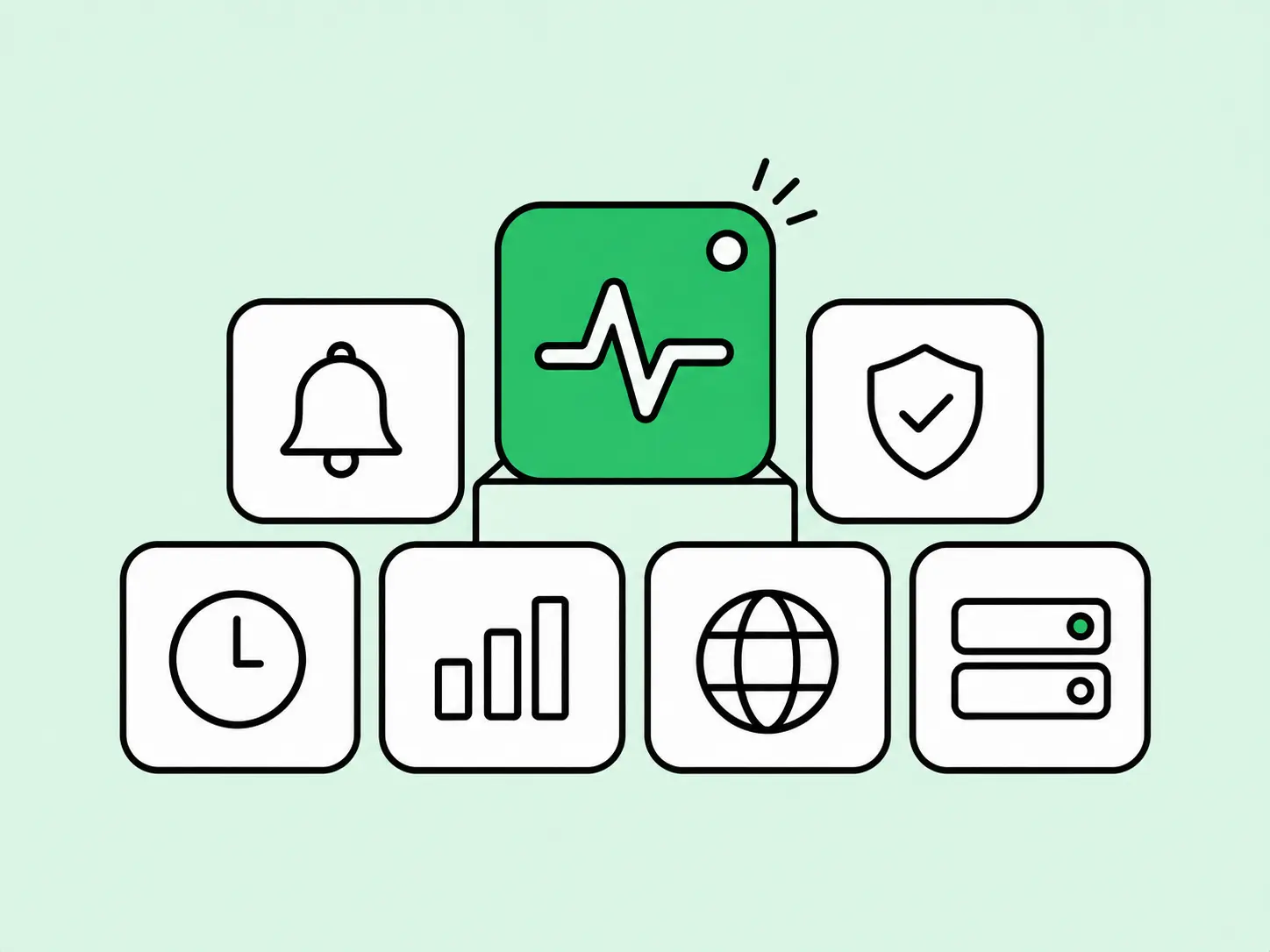
1. SIOPS. Best for freelancers who sleep with their phone on silent.
SIOPS is a mobile-first uptime monitor built for one job: making sure you find out the moment a client site goes down, even at 3am with your phone on Do Not Disturb. That is the gap almost every other tool on this list shares. Better Stack's phone call alert, like SMS and push everywhere else, can still be silenced by your phone's Focus settings unless you have manually saved the number as an emergency bypass contact.
SIOPS uses the iOS Critical Alert permission and the Android alarm channel, the same tier your morning alarm clock uses, so silent mode cannot mute it. Setup is a two-minute, no-code flow: paste a URL, pick an alarm tone, done. Every monitored site gets a public status page you can hand to clients. The free Hobby tier covers 5 sites with the alarm included; the Serious tier is $3.75 a month effective on annual billing ($4.99 monthly) for 10 sites, unlimited alarms, and checks every 30 to 60 seconds.
What it does not do: logs, tracing, or full observability. If you need those, Better Stack is the better fit. If you need to actually wake up, SIOPS is built for that specifically.
2. UptimeRobot. Best free monitor count.
UptimeRobot has been the default free uptime monitor since 2010, and its free tier is still the most generous on raw numbers: 50 monitors at 5-minute checks. If you manage a lot of low-stakes sites and can live with a 5-minute detection window, nothing beats it on price, because the price is zero.
The trade-offs are the 5-minute free interval (a real outage can run several minutes before the next check catches it) and alerts that behave like standard notifications, so they get silenced overnight the same as everything else. Paid plans start around $7 a month for faster checks. It is the safest, most boring choice, and boring is often correct.
3. Pingdom. Best for detailed performance reporting.
Pingdom, now a SolarWinds product, is the veteran. Its strength is web performance data: page load waterfalls, real user monitoring, and geographic performance breakdowns that go well beyond "is it up." If your work is tied to page speed and SEO, and a client actually reads performance reports, Pingdom surfaces that detail better than most.
The downsides are a per-check pricing model that climbs as you scale, no free tier since the SolarWinds acquisition, and an interface that shows its age. Entry pricing starts around $15 a month. It is aimed at agencies and pros who need the performance reporting, not solo devs who just need an alarm.
4. StatusCake. Best for mixed website-health checks.
StatusCake has been running since 2012 and covers more than uptime: SSL certificate expiry, domain expiry, and page speed all come in the same tool. If you want one place to catch a lapsed SSL cert as well as a down site, it is a reasonable pick with a usable free tier.
Two things to know: the public status page is a separate paid product from the monitoring, so the client-facing piece costs extra, and the interface is frequently described as dated with basic support. Paid monitoring starts around $20 a month.
5. Site24x7. Best for a small estate that needs fast checks cheaply.
Site24x7, from Zoho, packs a lot into a low headline price. The $9 a month Starter plan includes real-browser checks and synthetic monitoring that competitors charge more for, plus server and cloud resource monitoring. For a technical user who wants breadth on a budget, it is strong value.
The catch is complexity. Site24x7's feature depth means a genuine learning curve, and the pricing has a heavy table of paid add-ons that push the real cost past the headline. It suits IT-leaning users and MSPs more than a freelancer who wants to paste a URL and move on.
6. Uptime Kuma. Best for self-hosters.
Uptime Kuma is the open-source darling: free forever, MIT licensed, a genuinely nice dashboard, and support for HTTP, TCP, DNS, Docker, and more. If you already run a homelab and enjoy maintaining your own infrastructure, it costs nothing and does almost everything.
The structural catch is that it runs on your server, which means it shares a blind spot with the infrastructure it watches, and it checks from a single location. The honest fix is running a second instance elsewhere to watch the first, which is real engineering time. Free in dollars, not free in hours.
7. Instatus. Best for status page communication.
Instatus is less a monitor and more a status page tool with monitoring attached. If your primary need is a beautiful, fast public status page to communicate incidents to customers, and monitoring is secondary, it is purpose-built for that and has a free tier.
If your primary need is being alerted fast and loudly when something breaks, it is not the tool for that job. Pair it with something alarm-first, or pick a tool that does both.
How to choose
The honest summary: pick Better Stack itself if you are a growing team that will actually use logs, tracing, and incident management together. Pick UptimeRobot for the biggest free monitor count. Pick Pingdom for performance reporting, StatusCake for mixed health checks, Site24x7 for cheap fast checks on a technical setup, Uptime Kuma if you love self-hosting, and Instatus if the status page is the point.
Pick SIOPS if you manage client sites, your phone is sometimes on silent at night, and you have ever found out about downtime from the client instead of your monitoring tool. That specific failure is the one SIOPS was built to prevent.
Most monitoring tools send a notification. SIOPS sounds an alarm that gets through Do Not Disturb. Start free at siops.app.
Canonical's Websites Went Dark for Four Hours While Ubuntu's Repos Stayed Up. So Was Ubuntu Down?
Outage Breakdown
ChatGPT Spent October 5 'Degraded,' Not Down. That's the Outage Your Monitoring Misses.
Outage Breakdown

Spotify Went Down for 173 Countries, and Its Only Status Page Was a Tweet
Outage Breakdown